
Bali & Balinese Furniture Explained | Craft Villages to Export Hub


Bali's furniture story doesn't start in a warehouse. It starts in a temple carving, in villages that have hand-carved wood for centuries.. Long before "Bali furniture" meant anything to a global buyer, villages across Gianyar Regency were carving doors, masks, and ritual objects for palaces and temples, using techniques passed down through families for generations. That same lineage of hand-carving, now paired with a modern export machine built around teak, suar wood, rattan, and increasingly bamboo, is what makes the island one of the more distinctive furniture-sourcing destinations in the world, and it's why Traviam runs guided sourcing trips here alongside our China trips.
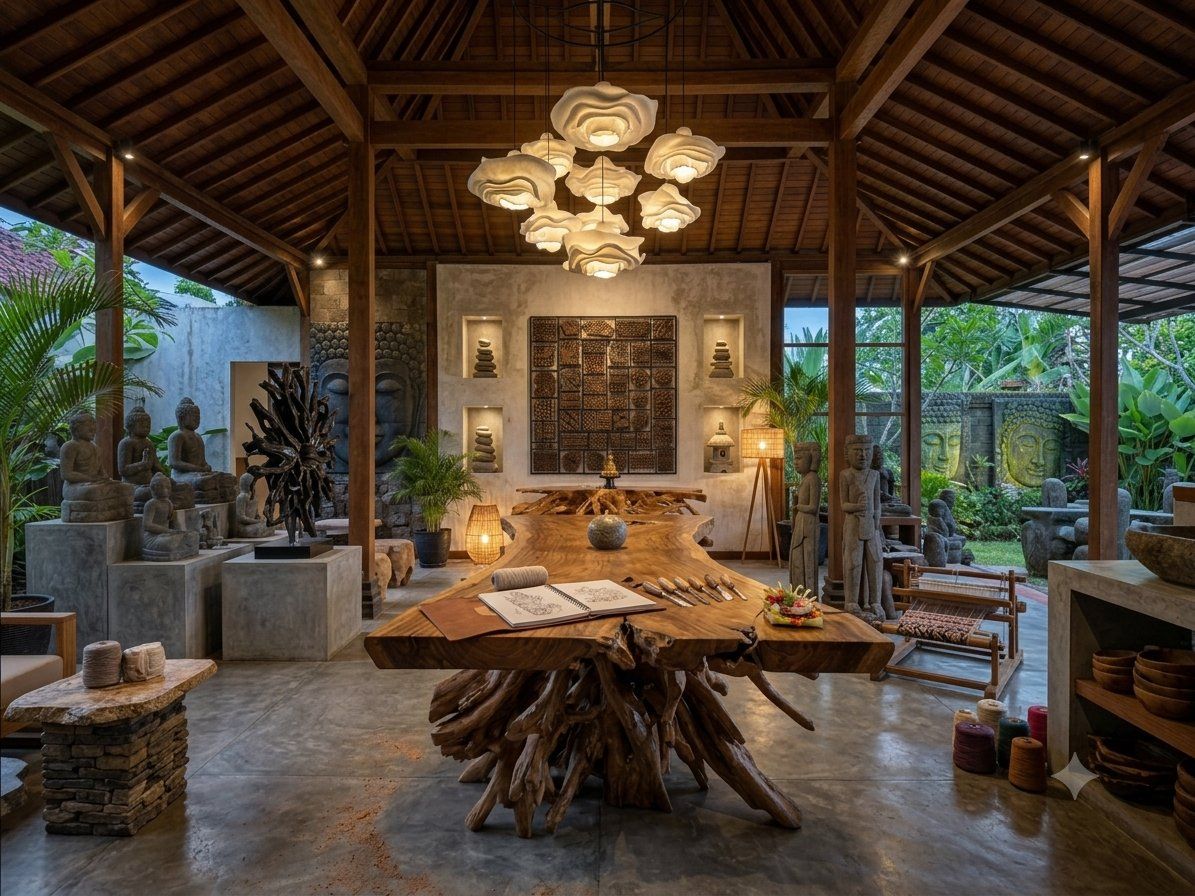
Gianyar Regency: Where Balinese Furniture Begins
If Bali has a furniture heartland, it's Mas, a village about 5-6 km south of Ubud in Gianyar Regency, sitting along the road that connects Denpasar to Bali's cultural centre. Woodcarving here traces back to at least the 14th century, during the Majapahit era, when Bali's arts began to flourish under royal patronage. For centuries, Mas's carvers, many from the Brahmin and Pande castes, were commissioned for temple doors, ceremonial masks, and palace ornamentation rather than furniture for sale.
The shift toward what we'd now recognise as a furniture and craft export trade came later, driven by the Pita Maha arts movement of the 1930s, when local artists worked alongside European painters Walter Spies and Rudolf Bonnet to revive and modernise Balinese craft traditions. Out of that generation came Ida Bagus Nyana and, later, his son Ida Bagus Tilem, carvers whose workshop grew from a family practice into a gallery employing around a hundred sculptors. Tilem's work eventually represented Indonesia at the 1964 New York World's Fair. Today Mas is home to thousands of carvers and hundreds of galleries, still working largely in Suar, ebony, and sandalwood: materials chosen because they hold fine detail and age well, which is exactly what both a temple carving and a statement furniture piece need.
Mas doesn't sit in isolation. It's part of a wider belt of craft specialisation running along the Denpasar-Ubud corridor: Celuk for silver and goldsmithing, Batuan for painting, Sukawati for its art market, each village historically specialising in one craft rather than competing across all of them. For a furniture buyer, this matters practically. Knowing which village, and which workshop within it, actually makes furniture rather than statues or masks is the difference between a productive sourcing trip and a scenic one.
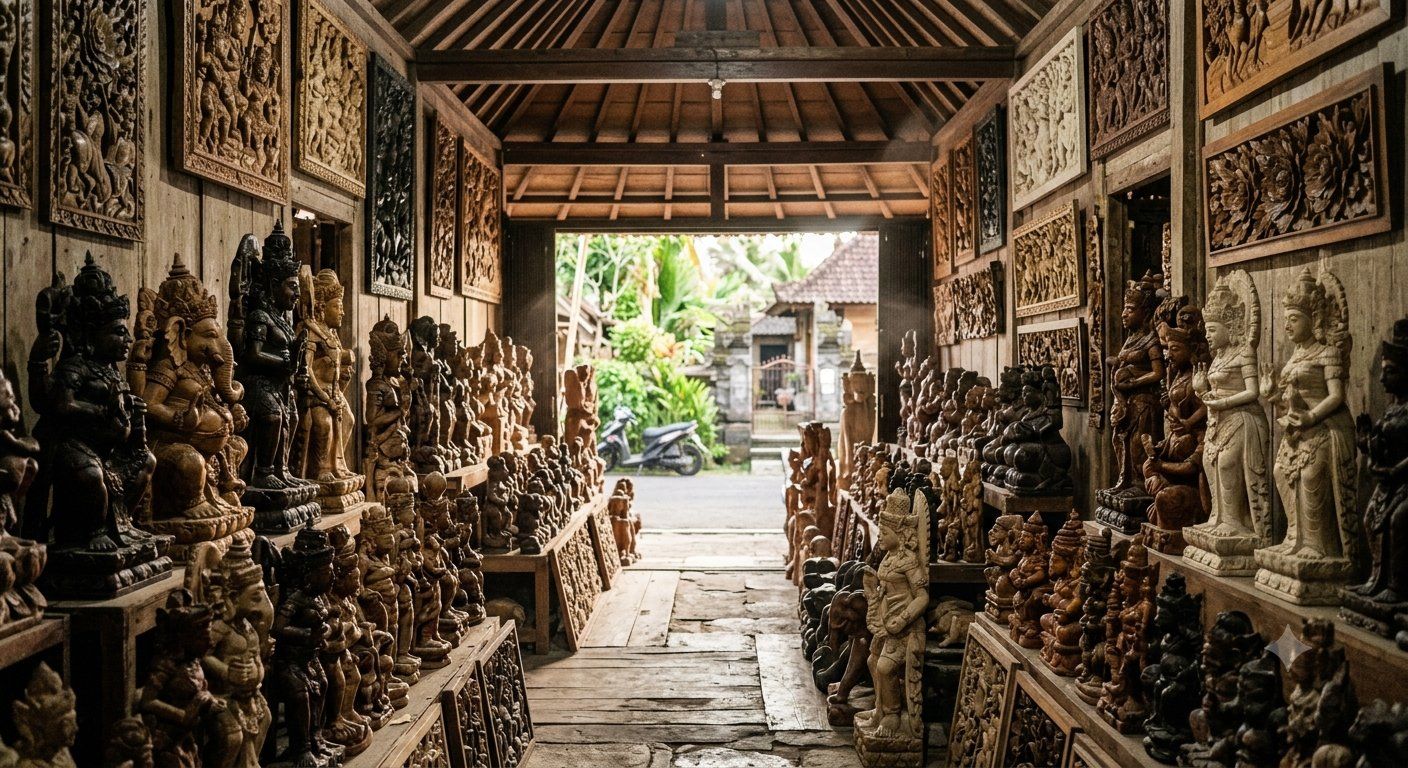
Kerobokan & Denpasar: Bali's Export Engine
If Mas is where the craft lives, Kerobokan is where the business happens. This district in Badung Regency, along with parts of Denpasar and Sanur, has become the island's de facto export corridor: a concentration of showrooms, workshops, and buying agencies built specifically to serve international buyers, interior designers, and hospitality projects rather than local retail.
The business model here looks different from Foshan's factory-to-showroom pipeline. Bali's export houses tend to run smaller, project-driven operations: several established exporters report that roughly 40% of what they ship is custom-made to a client's own specifications rather than pulled from a standard catalogue, serving everything from private villas to international hotel groups. That custom-heavy, design-led approach reflects Bali's core client base (hospitality and villa projects) more than it reflects mass retail, and it's a big part of why buyers come to Bali for bespoke, natural-material pieces rather than large-volume standardised runs.
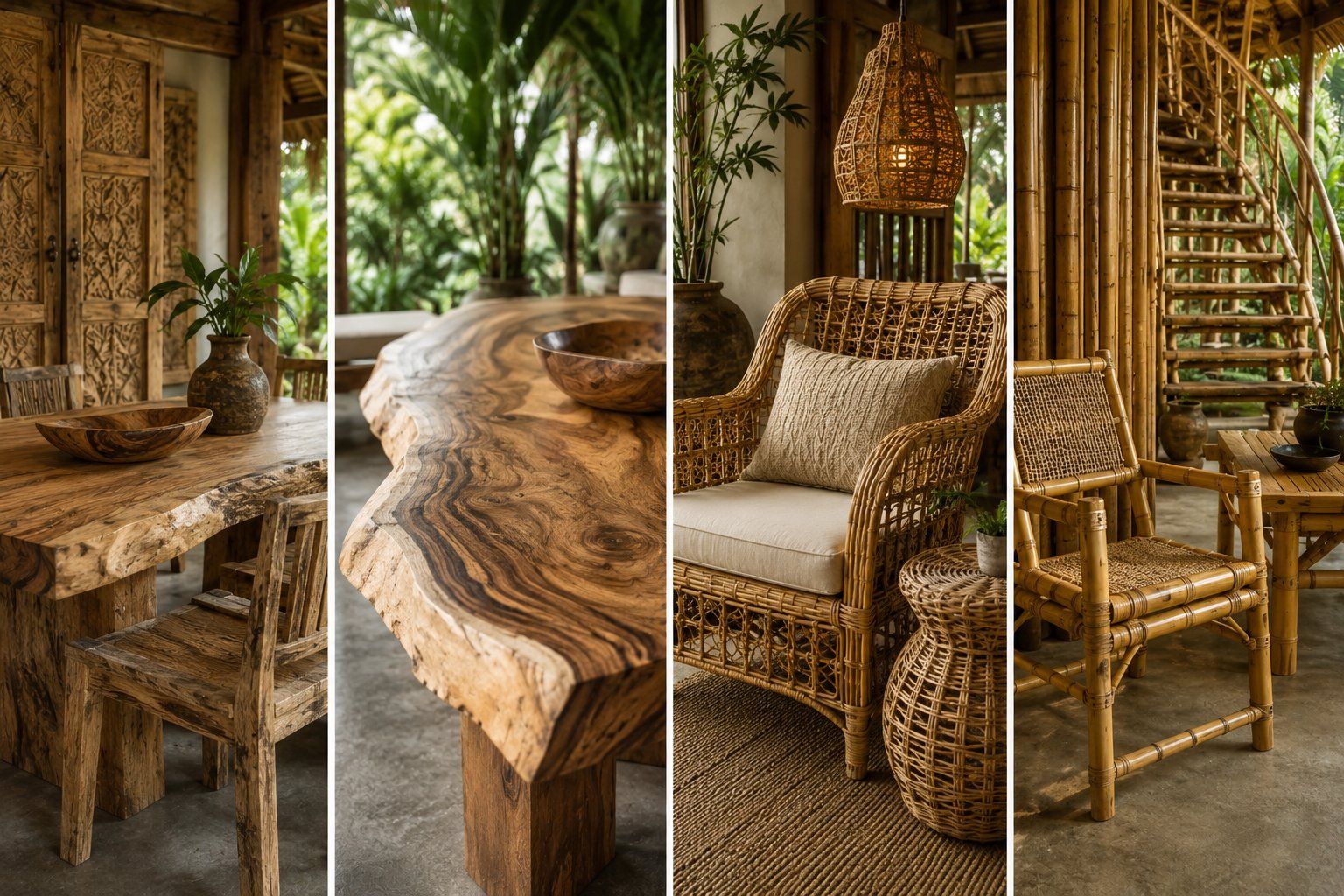
The Materials That Define Balinese Furniture
Teak. Indonesia holds some of the world's largest FSC-certified teak plantations, managed by the state forestry enterprise Perhutani, mostly across Java. Bali's workshops draw on two very different teak streams: new plantation teak carrying SVLK legality certification, and reclaimed teak salvaged from old Javanese houses, railway sleepers, and boats, prized for its already-settled grain and a story that plantation wood can't offer. Genuine antique-look teak furniture from Bali is very often built from this second stream, not aged artificially.
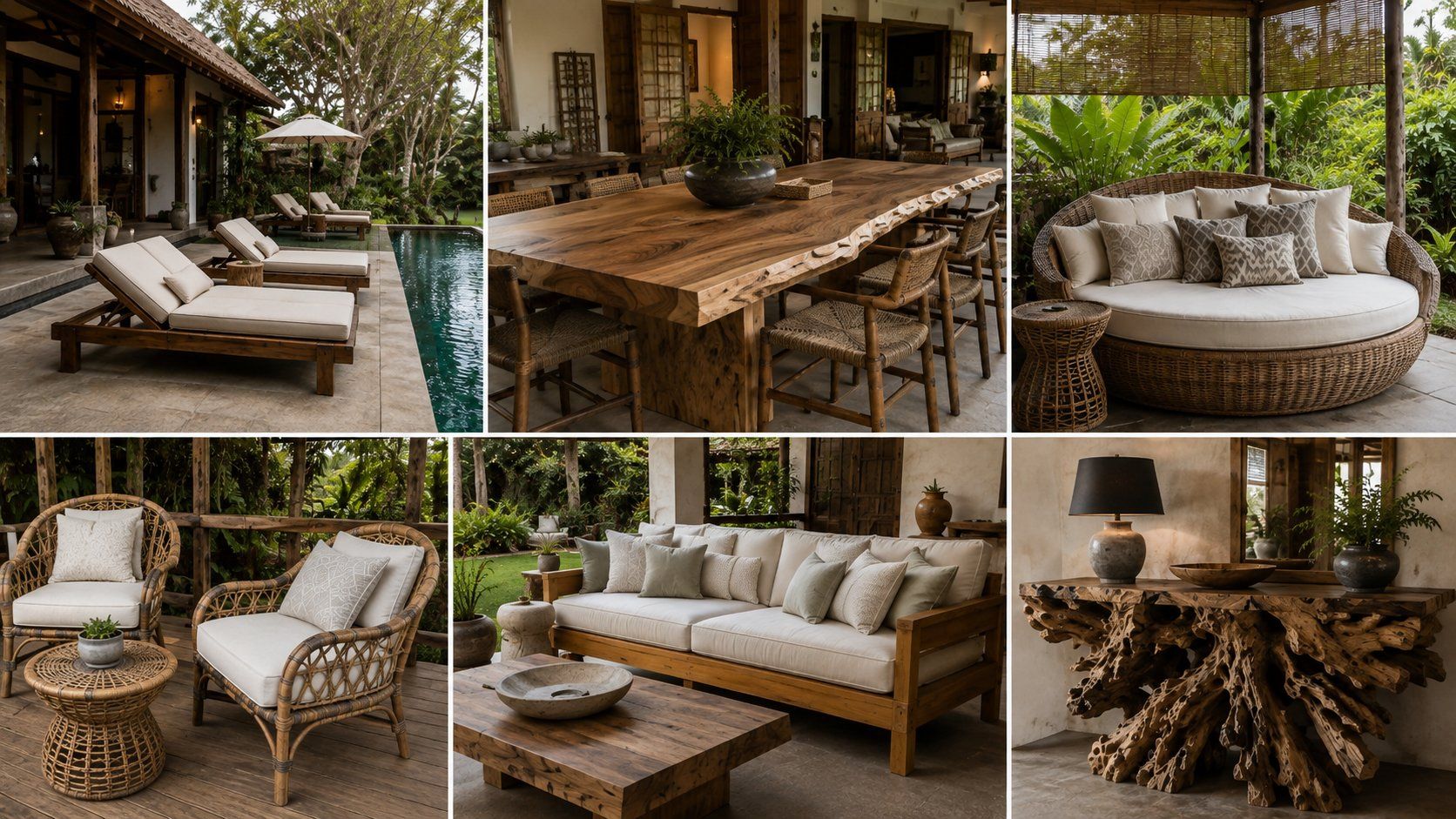
Suar (monkeypod). Walk into almost any Bali furniture showroom and you'll see thick, live-edge dining tables in Suar wood, also called monkeypod, rain tree, or Albizia saman. It's a fast-growing, non-endangered tropical hardwood, originally introduced to Indonesia from South America generations ago, valued for its dramatic interlocking grain and the fact that a single slab can span a full dining table without joins. Because the trees grow quickly on village land rather than in protected forest, Suar has become the material of choice for the live-edge, sculptural furniture Bali is now known for internationally.
Rattan. Indonesia is one of the world's largest rattan producers, and a 2011 government ban on exporting raw, unprocessed rattan reshaped the whole industry, forcing the value-added weaving and furniture-making to happen inside the country rather than overseas. That policy is a big part of why Bali (alongside Cirebon and other Javanese hubs) developed such deep rattan and wicker weaving expertise. Alongside traditional natural rattan, Balinese workshops now produce heavily for the outdoor and hospitality market using synthetic rattan: UV-resistant polyethylene fibre woven over powder-coated aluminium frames, built specifically to survive pool decks and monsoon seasons without the maintenance natural rattan needs.
Bamboo. The newest chapter in Bali's material story is bamboo, pushed into the global spotlight by architecture studio Ibuku's Green Village, a community of homes near the Ayung River built almost entirely from bamboo (structure, staircases, and furniture alike) under designer Elora Hardy since 2010. Bamboo's appeal is straightforward: it's stronger relative to its weight than many hardwoods, grows to maturity in a few years rather than decades, and, once properly treated and cured, holds up structurally for the long term. What began as an architecture project has fed a growing bamboo furniture and homeware trade across Bali's craft villages, and bamboo has become the island's most sustainability-focused export material.
Beyond Furniture: Stone, Shell, and Sculptural Decor
Furniture and lighting are only part of what a Bali sourcing trip covers. A few categories sit just outside "furniture" in the strict sense but end up in the same shipping containers, and they're worth knowing about before you go.
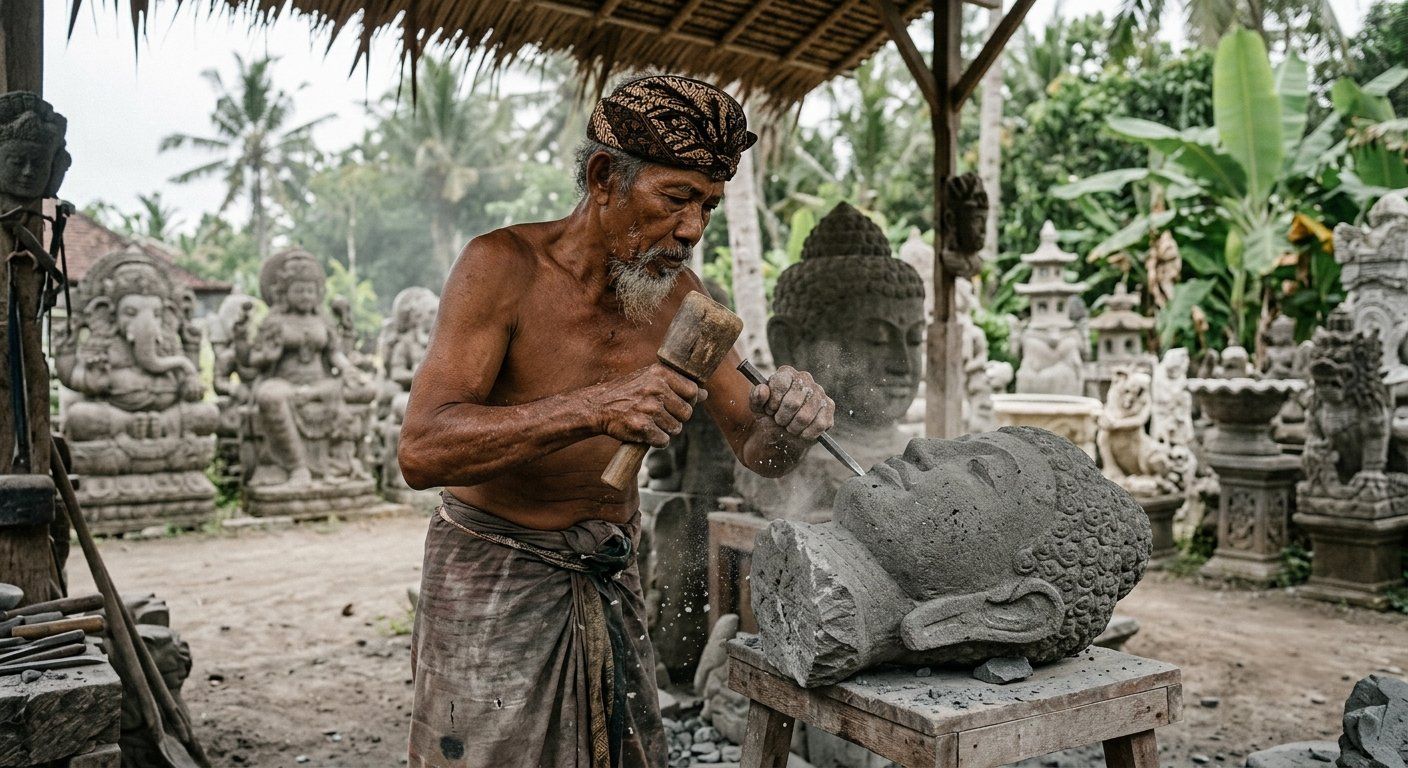
Batubulan's stone carving. A short drive from Mas, on the same Denpasar-Ubud road, sits Batubulan, Bali's dedicated stone-carving village, working almost entirely in paras, a soft grey volcanic andesite quarried locally. Batubulan's carvers have supplied temple guardians and palace reliefs for generations, and that same skill now produces Buddha heads, garden statues, and stone wall panels for the export market. It's a separate craft tradition from Mas's woodcarving, even though both sit within a few kilometres of each other.
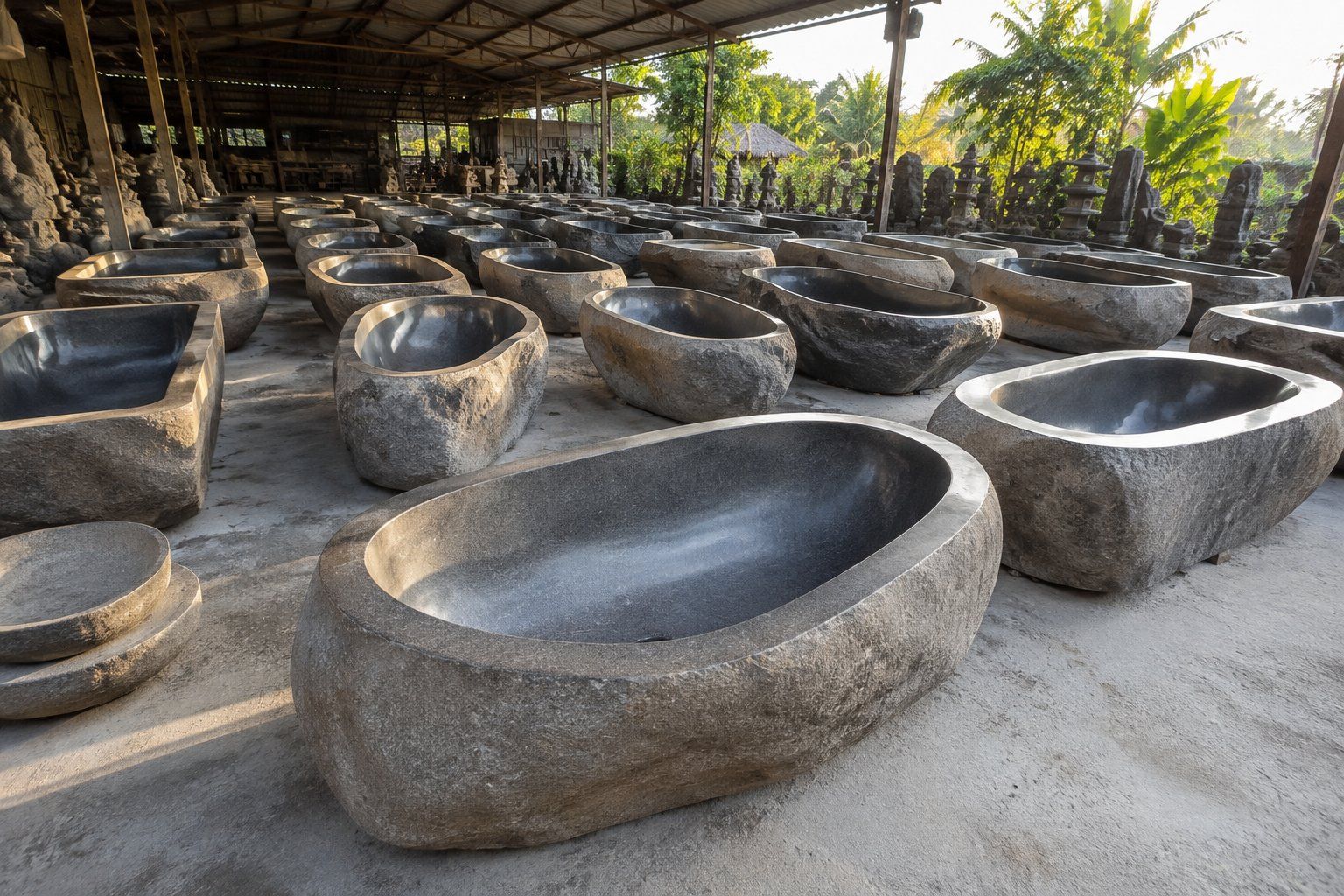
River stone sinks and bathtubs. Walk through almost any Bali villa or boutique hotel and you'll find a bathroom built around a single hollowed river boulder: a river stone sink or bathtub, usually sourced from volcanic riverbeds in Java and finished by hand into a basin with a polished black interior and a raw, unpolished exterior. It's become such a fixture of tropical villa design that entire yards exist just to display rows of them by size and shape. It's worth requesting specifically if a bathroom or spa fit-out is part of the project.
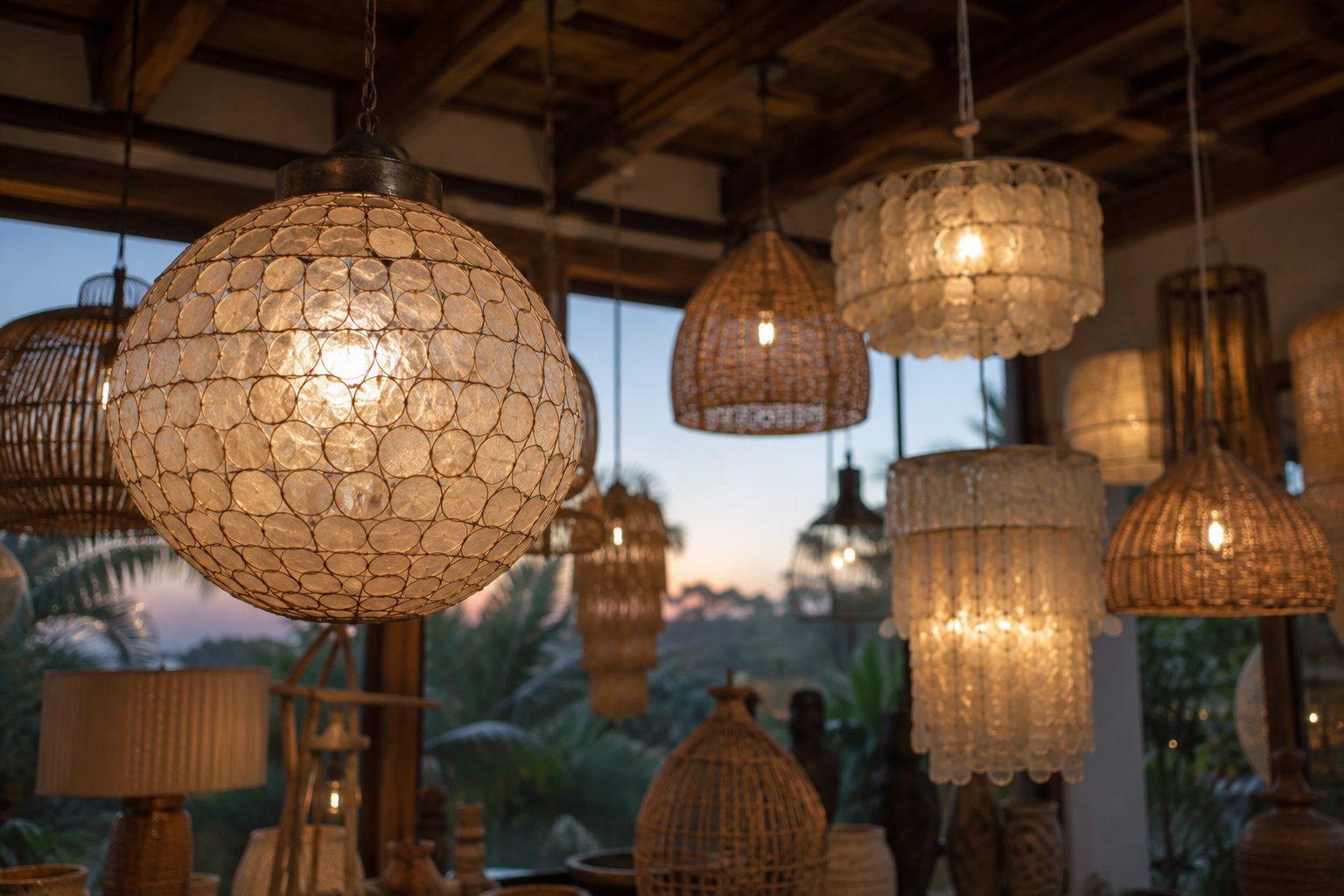
Capiz shell and natural-fibre lighting. Alongside the LED and crystal fixtures out of Guzhen, Bali has carved out its own lighting identity using capiz shell (thin, translucent oyster shell cut into small panes and wired into globes, pendants, and chandeliers) plus abaca, rattan, and rope shades woven over metal frames. It's an organic, textured look that's become closely associated with tropical and boho-styled interiors, and it's a real point of difference from what a China sourcing trip alone would cover.
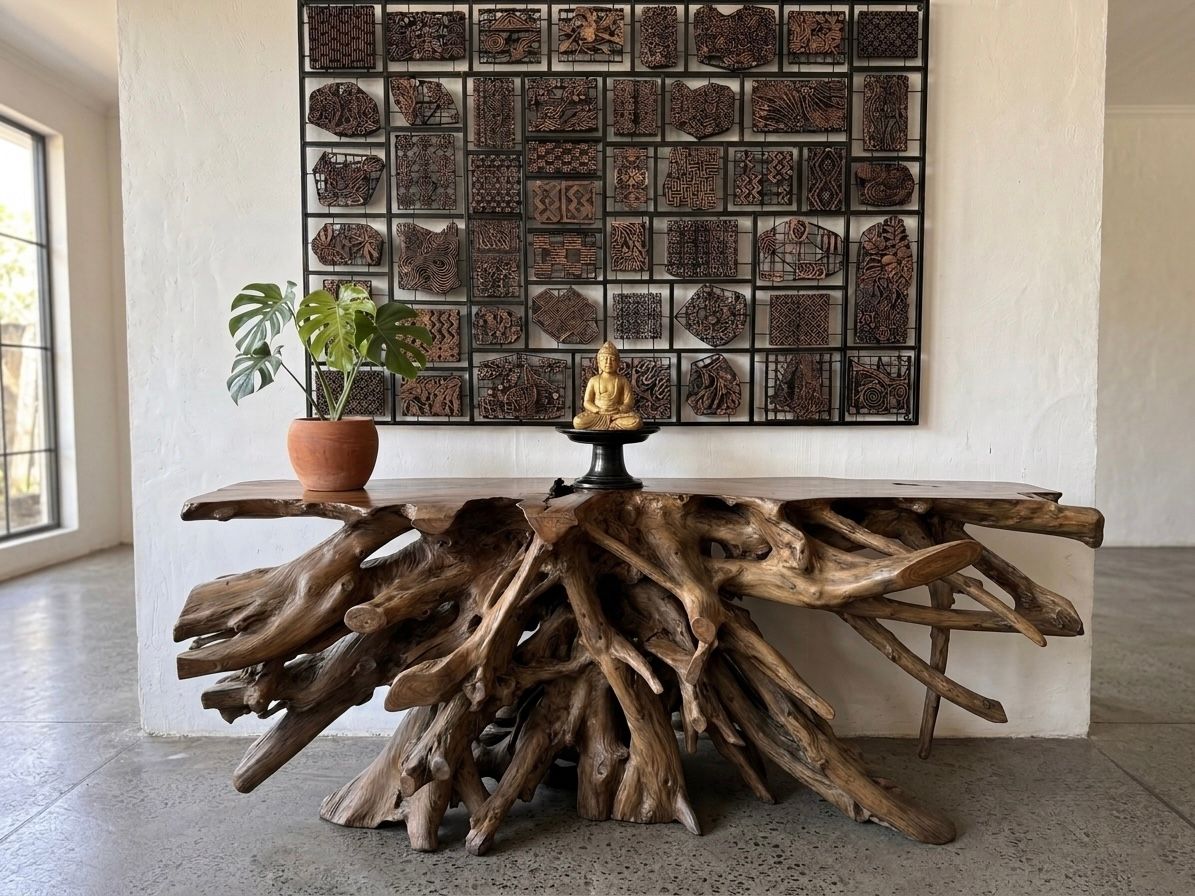
Root and driftwood furniture and sculpture. Beyond the live-edge Suar slabs covered above, Bali workshops also build furniture around whole teak roots, turning a root's natural branching into the base of a console or side table rather than shaping it into a flat slab, and carve large driftwood pieces into freestanding sculpture, from abstract forms to full-scale animal figures. These tend to be one-of-a-kind pieces more than catalogue items, which is part of the appeal for a statement entryway or lobby piece.
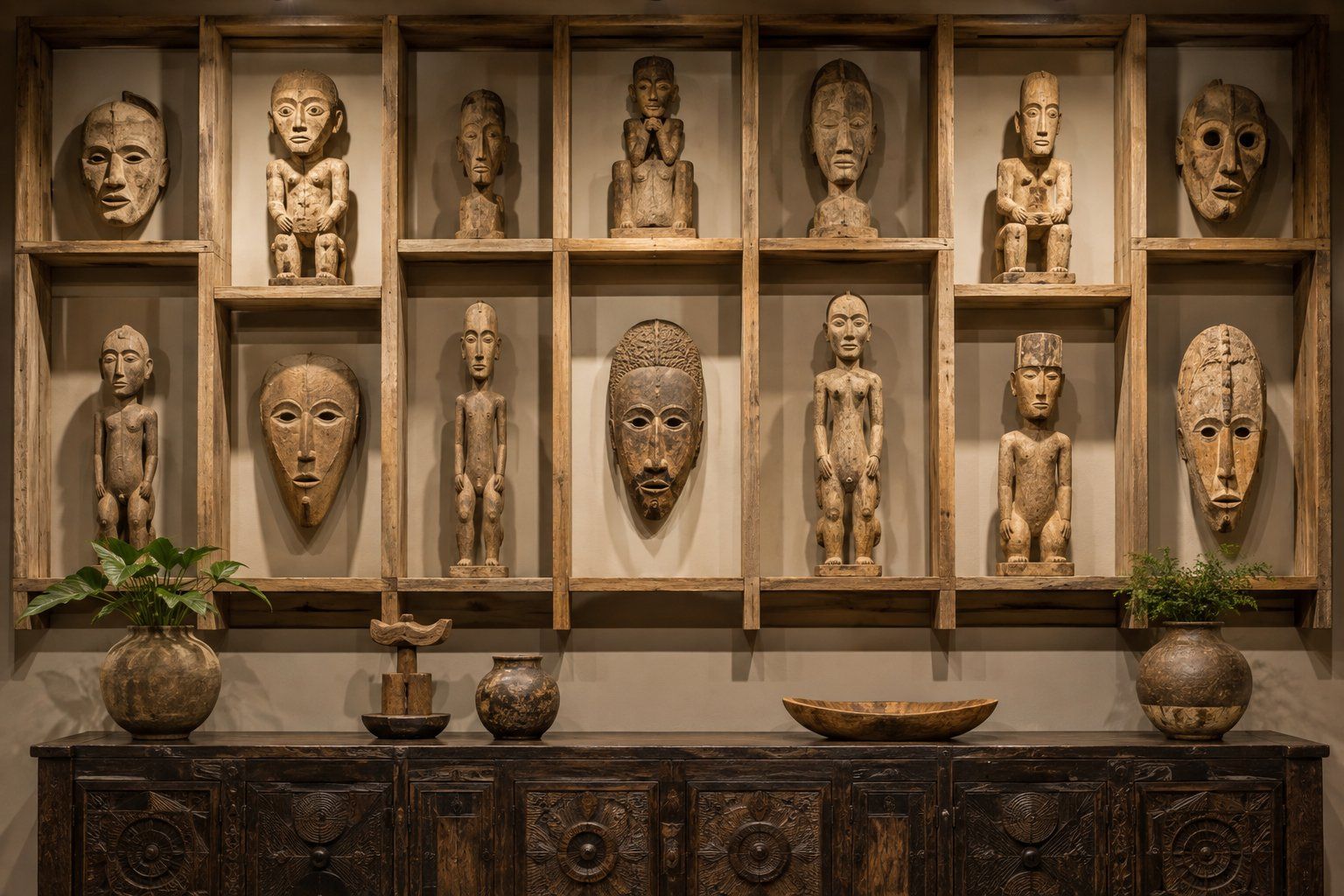
Primitive and tribal-style decor. It's also worth flagging honestly: a lot of the ancestor-figure carvings, tribal masks, and primitive-style wall art sold through Bali's export houses trace their design language back to other Indonesian islands (Sumba, Kalimantan, or Papua) rather than to Balinese craft traditions specifically. Bali's trade network sources, finishes, and exports this work alongside its own furniture, so it shows up in the same showrooms and containers, but it's a different regional tradition channelled through the same export hub rather than a Balinese craft in its own right.
Why Bali Leans Toward Hospitality and Villa Furniture
China's Pearl River Delta hub, which we covered in our last post on Foshan, Dongguan, and Guzhen, is built for scale and catalogue depth: thousands of manufacturers producing everything from sofas to lighting to wardrobe hardware within a few kilometres of each other. Bali plays a different role entirely. Its industry grew up alongside the island's hotel and villa boom, so its manufacturing strengths sit exactly where that demand sits: all-weather outdoor seating, daybeds and loungers, natural-material dining sets, and one-off statement pieces designed to suit a specific space rather than a product line. It's a smaller, more artisanal supply base than Foshan's, but it's calibrated closely to resort, villa, and boutique hospitality furnishing: outdoor and natural-material categories where China's hub, for all its scale, isn't the natural first stop.
Getting Furniture Off the Island
One detail that surprises first-time buyers: Bali has no full international container port of its own. Benoa Port in Denpasar handles bulk and passenger cargo and has been steadily building out container capacity, but the bulk of Bali's furniture exports still move overland by truck to Tanjung Perak, the major container port in Surabaya, East Java, Indonesia's second-busiest container port, before heading out to sea. Shipments are typically quoted FOB Bali or FOB Surabaya, and the island's rainy season, roughly November through March, is the main factor that can push out lead times, more so than production itself. It's a logistics quirk worth knowing about upfront, since it affects planning timelines more than it affects the furniture itself.
A Few Common Questions
Is Bali furniture the same as Indonesian furniture generally? Not quite. Bali is one of several Indonesian furniture hubs, alongside Java towns like Jepara (teak carving) and Cirebon (rattan). Bali's own strength is its craft-village woodcarving tradition combined with an export trade built specifically around hospitality and villa projects, though materials and workshops from Java feed into Bali's supply chain too.
Is reclaimed teak furniture from Bali actually old wood, or is it made to look that way? Genuine reclaimed-teak pieces are built from salvaged timber (old houses, railway sleepers, boats) rather than new wood distressed to look aged. It's worth asking a supplier directly which stream a piece comes from, since both new SVLK-certified plantation teak and reclaimed teak are common in the market.
Why does so much Balinese outdoor furniture use synthetic rather than natural rattan? Synthetic (PE) rattan resists UV, moisture, and heavy hospitality use in a way natural rattan can't without frequent upkeep. That's why resorts and hotels, Bali's biggest furniture clients, lean toward it for poolside and outdoor pieces, while natural rattan and wicker stay popular for indoor furniture.
Does Traviam source from Bali the same way it does from China? Yes. Alongside our China sourcing trips, Traviam runs guided trips to Bali for clients who want natural-material, outdoor, and villa-style furniture direct from the island's workshops, with the same on-ground quality checks and door-to-door handling we use for China.
Curious how a Bali sourcing trip fits into a project alongside our China sourcing model? Get in touch with our team to talk through what your project needs.